Reading, Writing and Phonics

Phonics

At Farington Moss St Paul’s we use Read Write Inc Phonics (RWI) to give your child the best possible start with their Literacy development. Mrs Hoare is our reading lead teacher, so if you have questions about RWI, contact school who can refer you to her.

At Farington Moss St Paul’s CE Primary School we aim for all our children to become fluentconfident readers who are passionate about reading.

Teach a child to read and keep that child reading and we will change everything.

And I mean everything

Jeanette Winterson

Children who read regularly or are read to regularly have the opportunity to open the doors to so many different worlds!

More importantly, reading will give your child the tools to become independent life-long learners.

We can achieve this together through:

  • Read Write Inc, a program to help to your child read at school

  • Encouraging children to develop a love of books by reading to them daily, at home and at school

  • Giving children access to a wide range of books at school and at home

What is Read Write Inc?

Read Write Inc (RWI) is a DFE approved systematic synthetic phonics programme, designed to develop the children’s reading fluency and comprehension as well as writing and spelling. Although the programme is designed for children aged 4-7, we will continue teaching RWI to children beyond the age of 7, as we use a stage not age approach. 

How will my child be taught to read?

We start by teaching phonics to the children in the Reception class. This means that they learn how to ‘read’ the sounds in words and how those sounds can be written down. This is essential for reading, but it also helps children learn to spell well. We teach the children simple ways of remembering these sounds and letters.

Reading

The children:

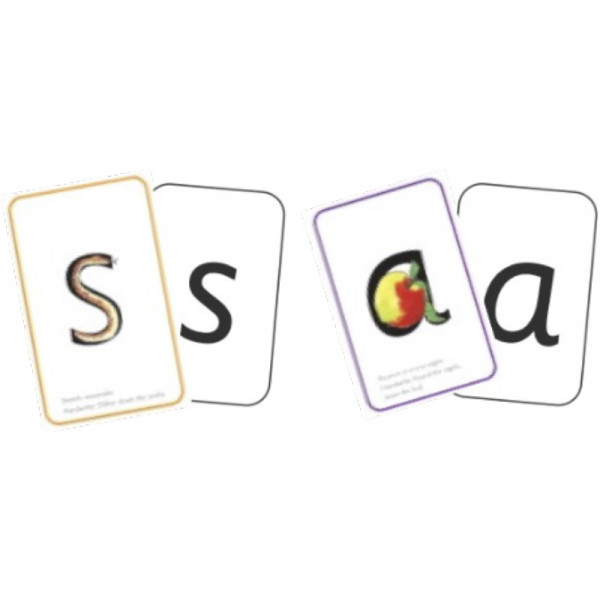
  • Learn 44 sounds and the corresponding letters/letter groups using simple picture prompts

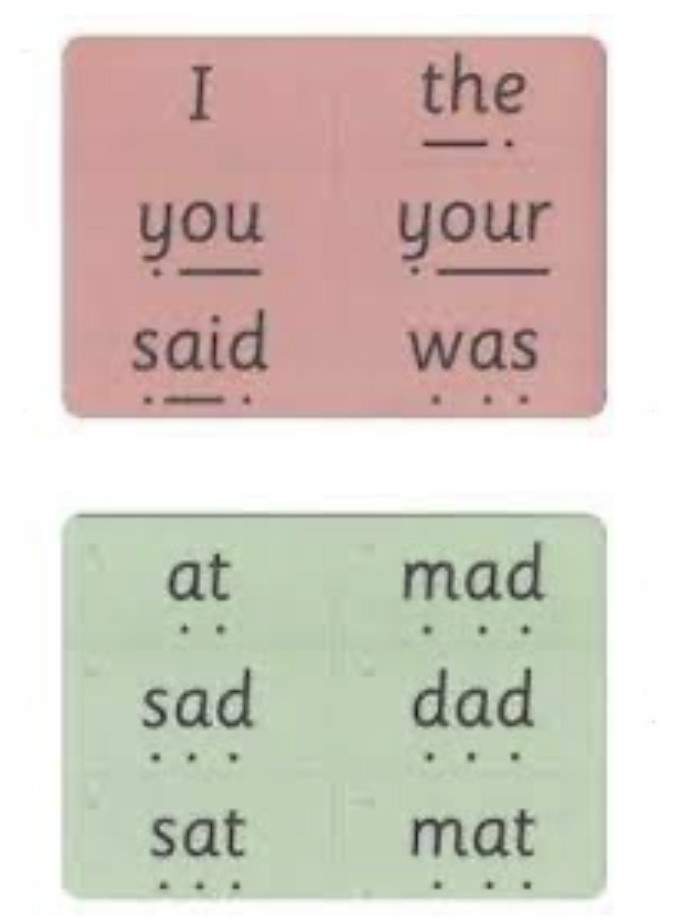
  • Learn to read words using Fred talk and sound blending

  • Read from a range of storybooks and non-fictions books matched to their phonic knowledge

  • Work well with partners

  • Develop comprehension skills in stories by answering ‘Find It’ and ‘Prove It’ discussion questions

Writing

The children:

  • Learn to write and form the letters/letter groups which represent the 44 sounds with the help of fun phrases

  • Learn to write words by using Fred Talk

  • Learn to build sentences by practising sentences out loud before they write 

Talking

The children

  • They work in pairs so that they:

  • Answer every question

  • Practise every activity with their partner

  • Take turns in talking and reading to each other

  • Develop ambitious vocabulary

Progressing through the stages

Children follow the same format as Early Years but will work on complex sounds and read books appropriate to their reading level. Daily sessions of RWI phonics last 20 minutes. Once children become fluent speedy readers they will move on to the RWI Spelling programme.

Children will be taught how to read as follows:

Before you start to teach your child, practice saying the sounds below. These are the sounds we use to speak in English. Children initially begin using pictures for each sound, this will help children recognise the sound and then form the shape of the sound. 

Fred Talk

We use pure sounds (‘m’ not’ muh’,’s’ not ‘suh’, etc.) so that your child will be able to blend the sounds into words more easily.At school we use a puppet called Fred who is an expert on sounding out words! we call it, ‘Fred Talk’. E.g. m-o-p, c-a-t, m-a-n, sh-o-p, b-l-a-ck.

The following video is an example of blending sounds with Fred. 

The children are taught the sounds in 3 sets.

Step 1:

Set 1 Sounds are taught in the following order together with rhymes to help children form the letters correctly and instantly recognise sounds ready for blending.

Set 1

Sound

Rhyme

m

Down Maisie then over the two mountains. Maisie, mountain, mountain.

a

Round the apple, down the leaf.

s

Slide around the snake

d

Round the dinosaur’s back, up his neck and down to his feet.

t

Down the tower, across the tower,

i

Down the insects body, dot for the head.

n

Down Nobby and over the net.

p

Down the plait, up and over the pirates face.

g

Round the girls face, down her hair and give her a curl

o

All around the orange

c

Curl around the caterpillar

k

Down the kangaroos body, tail and leg

u

Down and under the umbrella, up to the top and down to the puddle

b

Down the laces, over the toe and touch the heel

f

Down the stem and draw the leaves

e

Slice into the egg, go over the top, then under the egg

l

Down the long leg

h

Down the horse’s head to the hooves and over his back

sh

Slither down the snake, then down the horse’s head to the hooves and over his back

r

Down the robot’s back, then up and curl

j

Down his body, curl and dot

v

Down a wing, up a wing

y

Down a horn, up a horn and under the yak’s head.

w

Down, up, down, up the worm.

th

Down the tower, across the tower, then down the horse’s head to the hooves and over his back

z

Zig-zag-zig, down the zip.

ch

Curl around the caterpillar, , then down the horse’s head to the hooves and over his back

qu

Round the queen’s head, up to her crown, down her hair and curl

x

Cross down the arm and leg and cross the other way

ng

A thing on a string

nk

I think I stink


At this stage we do not use the letter names

Use the link below to support your pronunciation  sounds correctly.

Step 2:

The children are then taught Set 2 Sounds - the long vowels. When they are very confident with all of set 1 and 2 they are taught Set 3 Sounds.

We are a happy and caring school, where children achieve well and make good progress.